
Newsroom
/
- Exhibition
CES 2026 Summary: How Will Robots Evolve with the Sense of Touch? The XELA Technology that Captured Global Attention
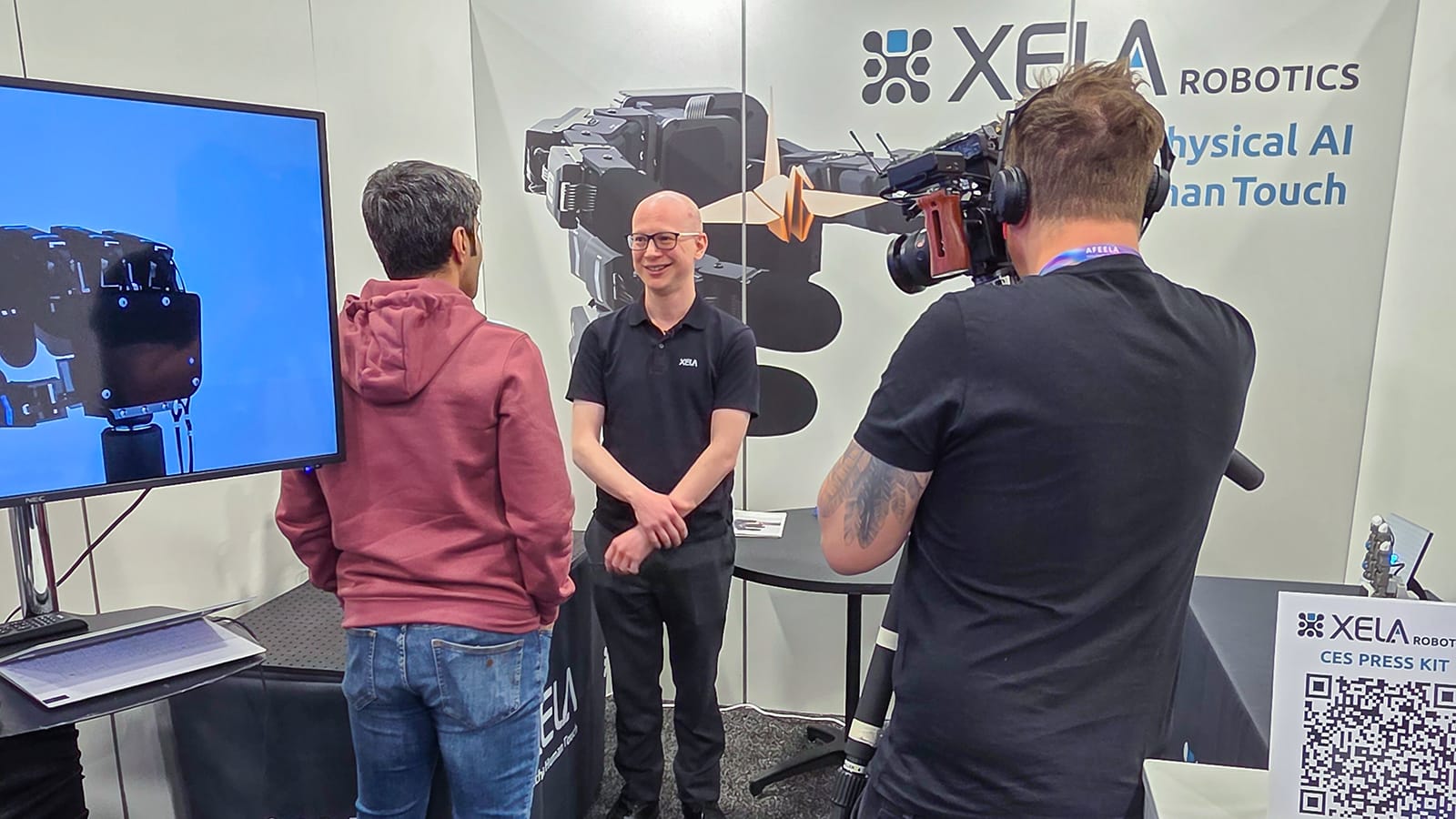
CES 2026, the world’s largest technology trade show, was held in Las Vegas in January.
Our first-time exhibit was a profoundly significant opportunity, reaffirming our conviction that the world’s media and industry have extremely high expectations for the “Physical AI with a Human Touch” that our company advocates.
Throughout the exhibition, the XELA booth was constantly bustling with visitors and media representatives seeking hints for solving challenges in robot tactile implementation and the latest knowledge. As humanoid robots rapidly advance, we were able to demonstrate to the world the value of how crucial the previously missing element, sophisticated tactile technology, truly is.
The Core of Physical AI as Captured by the Media
The goal we set beforehand for this exhibition—to “capture media attention and broaden awareness of the technology”—was achieved in a way that far exceeded our expectations. This extensive media exposure did not merely boost our name recognition; it became an opportunity for a deeper understanding of the specific solutions realized by our tactile sensors. For example, technologies such as complex picking and placing, delicate handling of fragile objects, and material and shape identification have proven how useful they are to companies worldwide developing next-generation robots.
Even before the opening, influential media from various countries reported on our technology as “the key for robots to perform more advanced tasks in the real world.” This allowed us to communicate the practicality and potential of diverse use cases to the market more concretely.
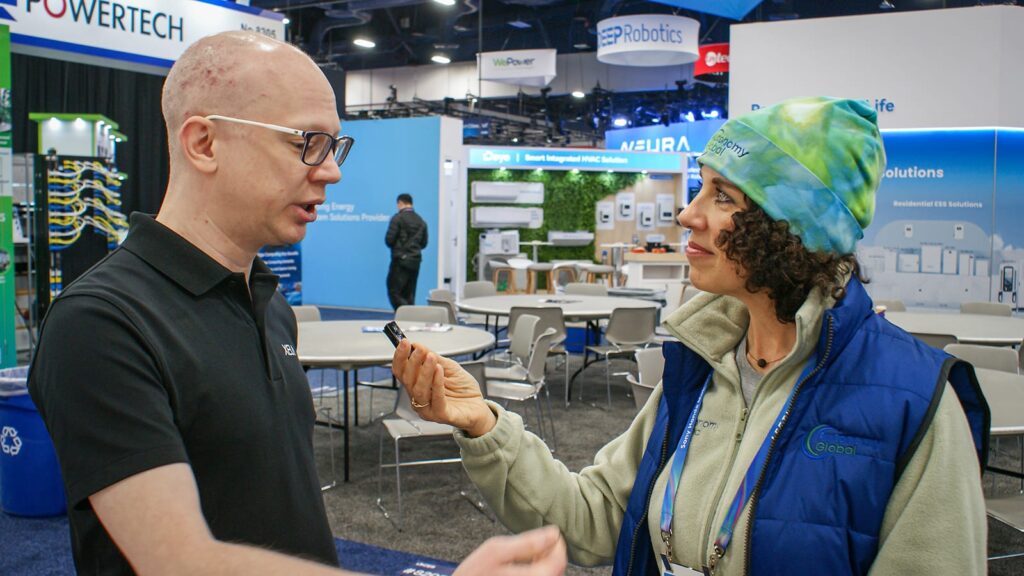
Examples of Key Media Coverage
- Scripps News (US): Reported on how XELA’s “uSkin” sensor enhances the dexterity of robot hands. In an interview with the network, our CEO Alexander Schmitz emphasized that the technology’s purpose is “not to replace humans, but to support tasks that humans find difficult,” conveying the large role tactile technology will play in a future where robots assist people.
- Sky News (UK): In a report on the theme of“Why robots still can’t match humans and what’s holding them back”, they pointed to the lack of “touch” as one of the biggest barriers in robot development. Through a demonstration where a robot gently pinched the interviewer’s finger, it was shown how our uSkin sensor enables delicate force control that is impossible with vision (cameras) alone (around 5:00).
- Autonomy Global (US): Published a feature article titled “Giving Robots a Human Touch: Inside XELA Robotics CES 2026 Tech Preview.” It introduced our technology as a “historical turning point” that will redefine every automation site, from factories to logistics centers, and praised its evolution into a total solution where hardware and software are highly integrated.
- La Repubblica (Italy): The major Italian newspaper featured XELA’s technology in a video report titled “The robots of the future seen in Las Vegas.” They particularly focused on the demonstration where the robot hand used its fingertip sensors to gently and accurately pick up an origami crane (around 4:40). They conveyed how the robot effortlessly handles the fragile paper creation through precise force control, presenting it as crucial technology supporting the future of robotics.
- Cheddar News (US): XELA Robotics appeared as one of the “Surprising technologies to see at CES 2026.” In the program, our tactile sensor was introduced as the missing piece to unlock the potential of the next generation of robots (around 8:24).
Summary of Media Coverage: An Impact Exceeding 120 Million Views
This media response reaffirms how pressing the market need is for “touch” in robotics. In fact, the total number of reports before and during the exhibition reached 91, with an estimated reach exceeding 120 million views, spanning a wide range from specialized magazines to television broadcasts and general business journals. The fact that 40 broadcast media outlets, in particular, focused on our technology underscores the global anticipation for our solution to the challenges facing next-generation robots.
The Single Origami Crane that Wasn’t Damaged for Four Days
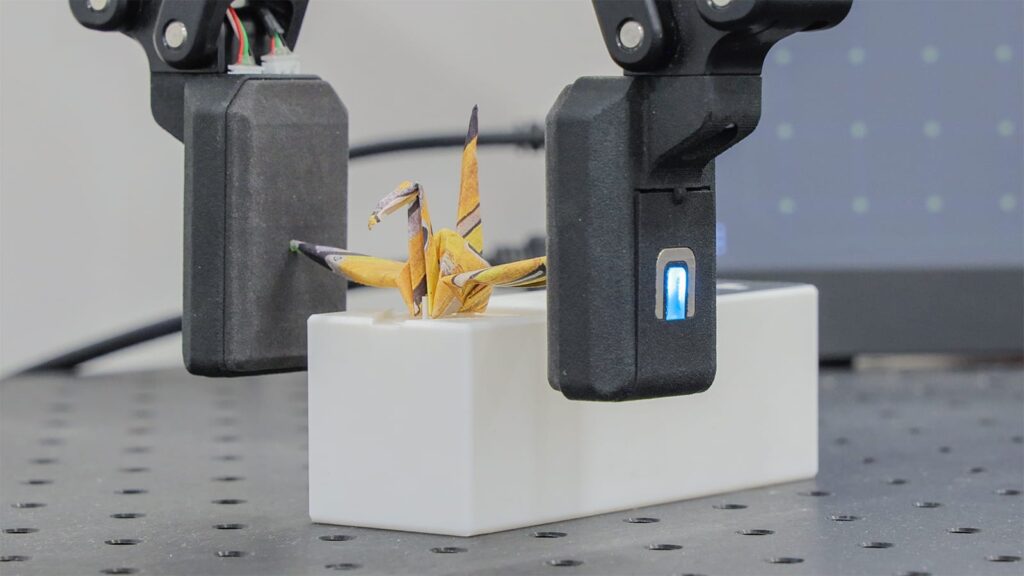
The demonstration that most captivated visitors at the exhibit was the grasping of a delicate origami crane.
“The astonishing fact is that we used the exact same origami crane for all four days of the exhibition,” our COO Valentino Fagard said. “This demonstration, which was completed without ever crushing or damaging it, became a clear indicator of our sensor’s precision and the certainty of delicate force control when handling fragile objects.”
This served as the Wow Factor, symbolizing how XELA’s 3-axis tactile sensor, uSkin, not only detects pressure but also accurately captures precise force adjustments.
Future Outlook: Accelerating the Future of Robotics with Tactile Technology
The overwhelming response at CES 2026 provided an opportunity to reconfirm that our technology meets a critical market need. Building on the momentum gained from this exhibition, we intend to accelerate our deployment as a more complete total solution—further integrating our hardware and software capabilities—moving beyond the mere provision of sensor devices.
As global interest in humanoid robots and advanced automation grows, XELA Robotics will continue to stand at the forefront of the world’s robotics market in 2026 as the indispensable partner that injects touch into these systems, thereby expanding the possibilities of AI in the physical world.
Please Feel Free to Contact Us
XELA Robotics welcomes collaboration with partner companies to create next-generation solutions utilizing our tactile technology. We will propose how XELA’s uSkin technology can bring innovation to your products, including concrete demonstrations. Companies considering collaboration and those with questions regarding this matter are encouraged to contact us via here.
Share this article