
Tactile Sensing in Industrial Domains: Why is ‘tactile sensing’ indispensable to the future of automation?
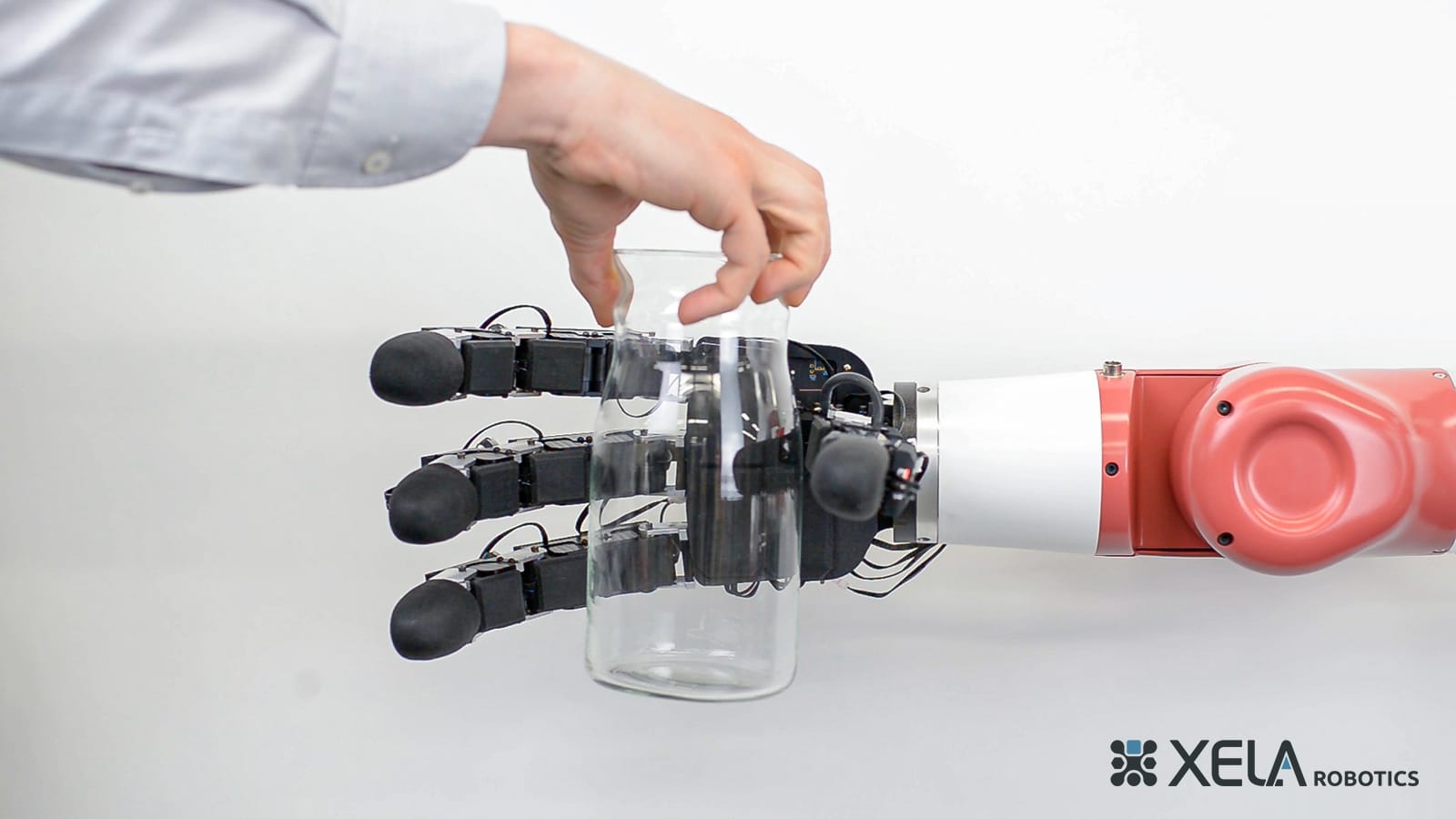
Tactile sensing has significant untapped potential across industrial domains. Vision is essential for locating objects and planning gross motion, but it is rarely sufficient for grasping, holding, and manipulating objects reliably. Cameras cannot detect the slip of a component between fingertips, measure the force applied to a fragile surface, or sense the subtle deformation that signals a secure grip. Touch is what allows humans to cope with pose uncertainty, variation in geometry and compliance, and dynamic disturbances. Industrial and household robots face the same challenges, yet most operate without any sense of touch. Our tactile sensors are designed to give robots exactly what they are missing.
Industrial Use Cases
Factory Automation
Insertion and assembly remain among the most demanding tasks in factory automation. Small misalignments from vision systems can damage parts when inserting cables into sockets or aligning electrical and mechanical components. Today, such tasks are often still performed by humans, who rely on touch to detect misalignment or adjust pose and force in real time. Tactile sensing can provide in-hand localization and orientation of grasped objects, as well as precise force control during insertion, screwing, or press-fitting, enabling automatic detection and correction of misalignment[1].
Warehousing and Logistics
Picking unknown objects in random orientations is still a largely manual part of warehousing and logistics. When a gripper picks small items like screws from a box, vision cannot be established inside the closed fingers and cannot determine how many objects were grasped or how stable the grasp is. Tactile sensing enables control of grasp force based on non-visual parameters such as weight, hardness, and texture[2]. It also supports the adjustment of grasp position based on contact area and estimated center of gravity, prediction of drop likelihood before transport[3], and slip detection and compensation during transport[4]. Dense packing into containers is, again, an insertion problem.
Agriculture
Fruit harvesting highlights the limits of vision-only solutions: the environment is highly unstructured, lighting changes over time, and fruits vary in shape, size and color. Vision is used for localization, but tactile sensing is required to pick without damage, manage variability in ripeness and firmness, and perform basic inline quality sorting (e.g., by weight or softness)[5]. Similar arguments apply to many quality-control tasks where subtle surface or compliance differences are difficult to assess visually. These examples illustrate a broader trend: in many countries, it is increasingly challenging to recruit workers for repetitive, physically demanding tasks. Tactile sensing is a key enabler for automating such work safely and reliably.
What are the basic requirements for Tactile Sensors and Systems?
To be viable in the use cases above, tactile sensors and systems must satisfy a demanding set of requirements, including easy integration with legacy grippers, high spatial resolution for detecting in-hand objects, shear force measurement for slip detection, and the industrial-grade durability to endure millions of cycles.
- Integrability and coverage: Sensors must be easy to integrate into existing hands and grippers. For humanoid or anthropomorphic hands, coverage beyond the fingertips (including the phalanges and palm) improves grip power and natural interactions. In many industrial settings, however, simple parallel or adaptive grippers are sufficient if well-instrumented.
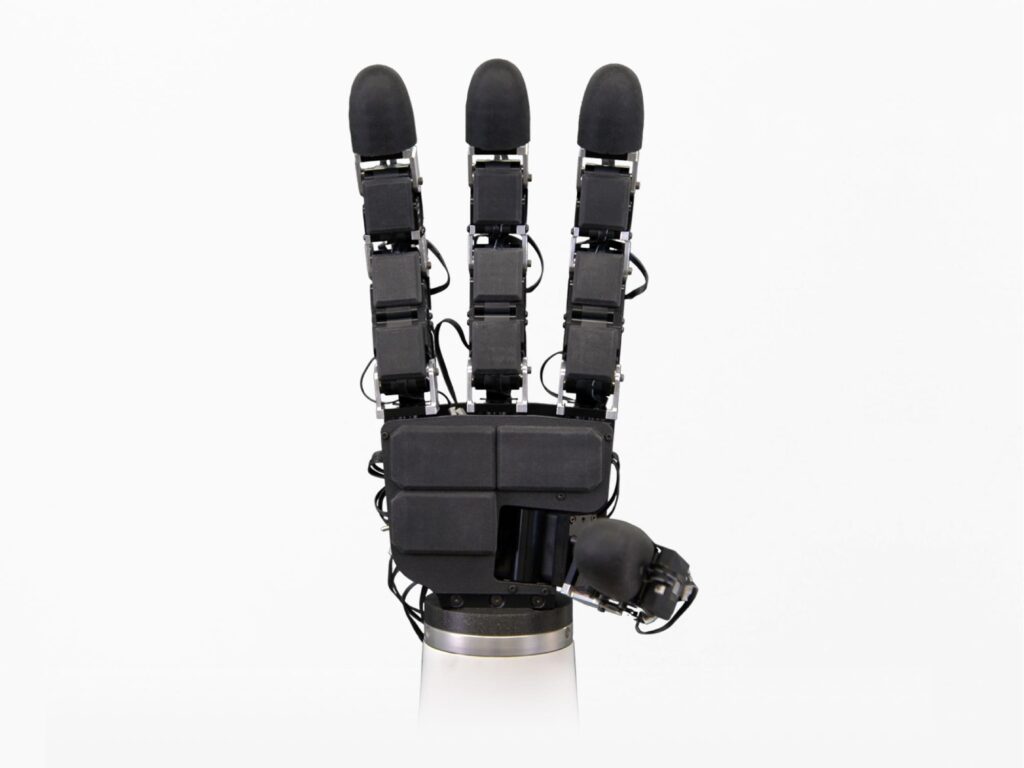
Allegro Hand V4 by WONIK Robotics fully covered with uSkin tactile sensors (368 sensing points).
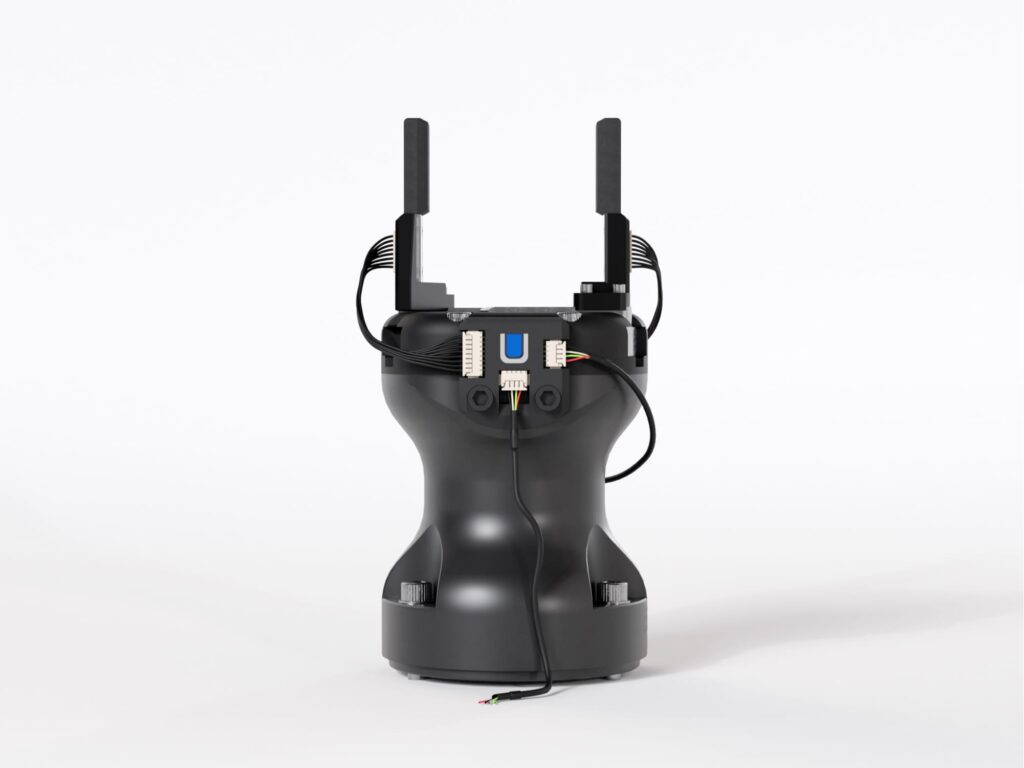
uSkin fingertip integrated on the Robotiq Hand-E gripper (6.6mm, 30 sensing points).
- Form factor and spatial resolution: Tactile modules should be compact to allow seamless embodiment as robotic skin, while providing sufficiently high spatial resolution to detect object orientation and in-hand pose.
- Shear and normal force measurement: Measuring shear in addition to normal forces is important for estimating weight, shape, and the onset of slip, complementing normal-force thresholds [6].
- Bandwidth, sensitivity, and texture cues: High measurement frequency enables fast cycle times, early detection of slip, and acquisition of texture information during exploratory or incidental rubbing. High sensitivity and resolution are required for light contact and accurate force control.
- Soft, robust skins: Compliant skins allow the sensor to conform to the object and increase contact area without excessive pressure. However, softness must be balanced against hysteresis and long-term drift. Industrial users require robustness over many cycles—often millions of grasps—and tolerance to abrasion, impacts, and contamination.
- Maintainability: Damage to the outer layers—for example, when manipulating sharp objects—is inevitable. Replaceable covers that can be swapped without changing the underlying sensor module are highly desirable. Self-healing soft substrates are an active research topic but are not yet industrially mature.
- Wiring, electronics, and calibration: Minimal and mechanically protected wiring is crucial for reliability; dangling leads are a major failure mode. Calibration to physical units (e.g., newtons) aids control, but, more importantly, the response must be consistent over a lifetime and across sensor instances. Variations due to temperature, lighting, or electromagnetic interference should be mitigated through reference elements and integrated compensation algorithms.
- Software, features, and system integration: From an industrial perspective, sensors must be easy to use: accessible data formats, intuitive visualization, and higher-level features such as slip detection, object pose estimation, hardness, weight, and texture estimation, grasp-stability prediction, and re-grasp suggestions. Complete solutions that integrate vision, robot control, and tactile feedback, including support for robot controllers, are often required. Simulation tools for tactile responses facilitate planning and machine learning.
- Human skill transfer and teleoperation: Skill transfer from humans to robots is increasingly used to program complex tasks. Combining tactile sensing with haptic feedback can enhance teleoperation and shared autonomy, allowing human operators to teach and supervise contact-rich operations more naturally.
Conclusion: How Tactile Sensing Opens New Horizons for Robotic Automation
As robots take on increasingly complex manipulation tasks, tactile sensing ceases to be a differentiator, and is now a necessity. The construction of robust tactile systems—capable of enduring harsh environments and performing delicate tasks that cannot be achieved by vision alone—is the key to successful robotic automation across all industries, including logistics, manufacturing, and humanoid robotics. Through tactile sensing, XELA Robotics is transforming the future of robotics and industry into a tangible reality.
Frequently Asked Questions
Q1. If a robot already has vision through cameras, why is a tactile sensor necessary?
A1. While vision is effective for object localization, it struggles to detect slippage or minute pressure changes in real-time once an object is gripped. By integrating tactile sensors, you enable precise force control at the fingertips—where the camera’s view is often obstructed—and allow for optimal gripping based on the object’s hardness and texture.
Q2. Can tactile sensors be attached to existing industrial robot hands or grippers?
A2. Yes, they can. Sensor modules with flexible designs, such as XELA Robotics’ uSkin, are engineered for seamless integration into parallel grippers, multi-fingered hands, and even the palms of humanoid robots from most major manufacturers. However, compatibility depends on the specific hardware shape and available space.
Q3. Can you verify if the sensors can be installed on our specific robot hand or gripper before we commit?
A3. Yes. We offer a complimentary integration feasibility analysis for customers considering our solutions. Our technical experts will analyze your hardware specifications in detail to determine if uSkin can be integrated and suggest the most effective configuration. Please feel free to contact us via the inquiry form with your hardware details.
Q4. Is it possible to see XELA Robotics products in person?
A4. Yes. We will be demonstrating our technology at the following upcoming global events:
- Sushi Tech 2026 (Tokyo) | April 27–29 | Global Area, Booth 347
- Robotics Summit & Expo (Boston) | May 27–28
- ICRA 2026 (Vienna) | June 1–5
- Automate 2026 (Chicago) | June 22–25
We also welcome requests for individual demonstrations. Please contact us through our official website to schedule a session.
Contact Us
XELA Robotics welcomes collaborations with partner companies to create next-generation solutions using our tactile technology. We are ready to demonstrate how uSkin technology can bring innovation to your products with specific, hands-on proposals.
If you are interested in a partnership or have any questions, please feel free to reach out to us here.
[7] Jaehoon Jung, Sunwoo Lee, Hyunjun Kim, Wonbeom Lee, Jooyeun Chong, Insang You, Jiheong Kang. Self-healing electronic skin with high fracture strength and toughness. Nature Communications 15, 9763 (2024).
Share this article